
Who decides what Houston children read in the classroom? What about kids in Marfa, El Paso, Amarillo, Beaumont, Fort Worth, or Abilene?
That responsibility largely falls within the purview of the Texas State Board of Education (SBOE), a 15-member elected body that defines what K-12 students need to know, and how teachers must go about imparting such knowledge and skills.
In 2023, legislators passed HB 1605, an act concerning, among other things, “the adoption of essential knowledge and skills for certain public school foundation curriculum subjects.”
“In adopting essential knowledge and skills,” the text continues, “the State Board of Education shall specify a list of required vocabulary and at least one literary work to be taught.”
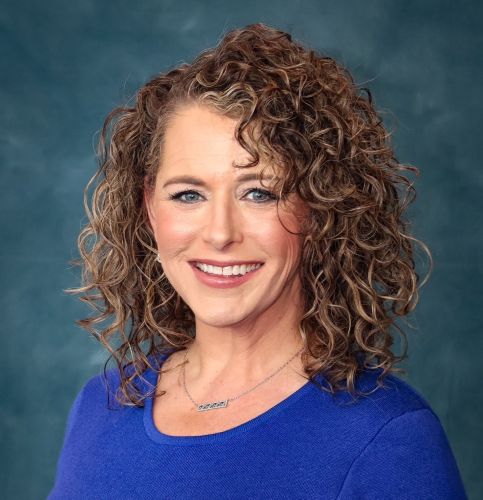
That sentence—and its far-reaching implications—caught the attention of Dr. Diane Miller, Professor of Urban Education and Associate Dean in the College of Public Service.
“Once we found out what works were in the list, we realized that this was going to change the face of English Language Arts testing in Texas,” said Miller. “If a text is on the list of required knowledge and skills, it isn’t an instructional suggestion. It’s assessable, meaning students can be tested in their year-end exams on anything from that list.”
This approach would have left very little latitude for teachers to choose what texts would work best for their students.
“English teachers love choice because choice motivates students to read,” said Miller. “This bill removed the ability for a teacher to exercise their professional judgement.”
And there was another concern: it was impossible to properly teach the assessable texts in a regular school year.
After talking with her colleagues at institutions across the state, Miller went to work advocating for teacher voice to be included.
Alongside Dr. Margaret Hale, from the University of Houston, and Dr. Kim Pinkerton, a former UHD professor who recently retired from Texas A&M University-Commerce, Miller undertook a two-phase research effort.
The first phase, a statewide survey, asked Texas teachers how long it would take them to properly teach each item in the list proposed by the SBOE.
The survey produced 751 responses from educators across all 20 Texas education service regions.
Answers varied, but as an example, first-grade teachers answered that it would take approximately 59.5 weeks to teach the knowledge and skills included in the texts required by the SBOE.
There are 36 weeks in a school year.
Equipped with this information, Miller and her fellow researchers went to Austin. To listen, yes, but also to provide testimony and present their research on “instructional time, grade-level appropriateness, and teacher familiarity/preparedness.”
Originally, she had planned to stay for one day. As deliberations continued, SBOE members peppered her with questions, and a day became a week, as discussions over the reading list, its feasibility and implications, continued.
“I had to go to Kohl's and buy clothes one morning,” Miller said. “I did not plan to stay in Austin that long.”
As a result of their advocacy and testimony, the SBOE revised the reading lists for grades 6-12, reducing the estimated instructional time required to roughly 45-65% of the academic year. That lower number of assessable texts will allow teachers to exercise their judgement when selecting texts and reading materials suited to their students’ interests and needs.
Both Sides of the Aisle
Since public education is often a political football, Miller went to Austin with some preconceived notions about who would and wouldn’t be receptive to changes to the SBOE list. “There were certainly extremes, but we worked with both Republicans and Democrats,” said Miller, many of whom share a passion for public education and producing a well-read, literate Texas citizenry, not partisan politics by proxy.
They had less success with the lists required for grades K-5, hence the second phase of their research. For this, Miller and her fellow researchers decided to conduct statewide teacher focus groups, an enormous undertaking that would require not just teacher participation, but also funding, as it would be necessary to purchase and ship texts from the required K-5 reading lists to teachers throughout Texas.
Enter a donor from Austin who wishes to remain anonymous, and they were off.
The participating teachers received copies of the proposed texts and spent two Saturdays in May discussing them over Zoom, a considerable commitment at one of the busiest times of the school year.
Their task went beyond estimating instructional time, as they were also asked to evaluate which required skills each book could actually help students develop, from identifying main ideas to understanding figurative language.
The results showed that the lists “would consume valuable weeks of instructional time, ranging from 77 percent to 142 percent” of the weeks in a school year. In addition, the research showed that some of the texts were not ideal for producing the SBOE’s desired learning outcomes.
Although the K–5 lists were revised more modestly as a result, Miller’s advocacy opened yet another avenue for teacher input, as the Texas Education Agency has sought her team’s input on required vocabulary lists.
Recognition
As a result of their advocacy on behalf of teachers, Miller and her team were acknowledged by the National Council of Teachers of English, receiving the NCTE Affiliate Intellectual Freedom Award. Miller will also be individually honored in 2027 with the Edmund J. Farrell Distinguished Service and Achievement Award, an award given in recognition of sustained dedication to serving and supporting the mission of the Texas Council of Teachers of English Language Arts.
But awards and recognition were never the goal. For Miller, teacher voice was the animating force.
"That was my real concern," Miller said. "There is so much debate and animosity surrounding education, we wanted to advocate for the inclusion of teacher voice and make sure their concerns were part of the conversation."